A Three-Day Production Plan for 200 Sale Videos
Organize a 200-video campaign target across preparation, batch production, testing, and final offer checks.
A large sale can create an urgent request for hundreds of product videos across several channels. The number is manageable only if the team knows what counts as a deliverable and what must be ready before the countdown starts. This plan uses 200 distinct product or creative briefs as a target; extra aspect-ratio or language exports are tracked separately.
Three days is a planning window, not a guaranteed production benchmark. The schedule depends on approved assets, staffing, tool capacity, review depth, and platform requirements. The most important work happens before day one.
Day 0: Prepare the production queue
Confirm the product list, final offer rules, approved prices, image rights, priority channels, and owners. Give every planned video a product ID and a brief. Mark any missing field as blocked. Reserve time to create a few tested visual structures and one sample per channel before the full run.
Keep copy modular: opening hook, product benefit, offer, and call to action should be editable independently. If a discount changes, the team needs to know which briefs and exports are affected. A spreadsheet can serve as the source of truth even when the editing tool does not support direct import.
Day 1: Produce in controlled batches
Split the 200 briefs into manageable groups, for example four groups of 50. Produce the first group and check product identity, crop, price, captions, and audio before proceeding. Choose batch size based on how quickly the team can detect and fix errors. A few randomly sampled full playbacks help, but price and offer information should be checked for every affected product.
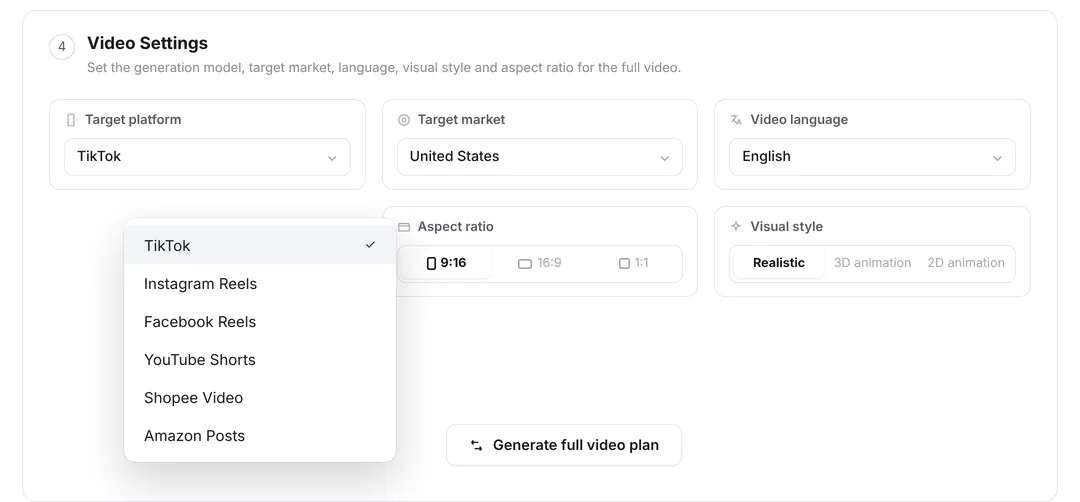
Vibbit's AI mixcut workflow and its platform and aspect-ratio settings may reduce repetitive editing for suitable inputs. Test a representative batch first; avoid assuming that every brief or ratio can be generated simultaneously. Track planned, generated, reviewed, and approved counts separately.
Day 2: Test and revise
Publish an approved subset where campaign timing allows. Compare opening hooks and offer messages using comparable audiences, spend, and time windows. Watch retention and click-through data, but do not treat a small early difference as proof that one version wins. Record the winning hypothesis and the affected briefs before making a batch change.
The goal is to improve the remaining queue without losing version control. Preserve the earlier export, revision number, and reason for the change so the publishing team can distinguish versions.
Day 3: Reconcile and distribute
Compare the approved-video register against the product and channel plan. Check that current prices and offer terms match the final campaign sheet. Export with a predictable name such as category_product_channel_ratio_v02, then hand off through the publishing process your team actually uses. A naming rule helps routing; it does not itself create an integration with a platform.
Keep a small capacity reserve for products or channels found missing during this final check. The sprint succeeds when the agreed set of videos is approved and publishable, with no stale offers, rather than when a generator reports 200 files. For a more detailed batch preparation process, see our 50-product video workflow.