Why "Batch Editing" Is Becoming the Next Core Competency of E-commerce Teams
Discover how batch video editing changes costs, testing speed, product coverage, and team workflows for scalable e-commerce content production.
As e-commerce content continues to deepen, video has become a standard component of product detail pages, feed ads, and social media campaigns. However, after most teams have crossed the stage of "going from zero to one," a new dividing line is emerging: the ability to scale video production is replacing the polish of individual videos as the key variable that determines an e-commerce team's operational efficiency.
Against this backdrop, "batch editing" is no longer just an efficiency tool—it is evolving into the next core competency of e-commerce teams.
I. The Real Dilemma of E-commerce Video Production: Demand Is Batch-Oriented, Production Is Linear
A typical e-commerce team, especially one operating across multiple platforms and multiple SKUs, has video demands that clearly exhibit batch-oriented characteristics:
- Large number of products: A store may operate dozens or even hundreds of SKUs at the same time, and each SKU needs a demo video
- Multiple platform dimensions: TikTok, YouTube, Instagram, Taobao, Pinduoduo, and other platforms have different requirements for video size and format.
- Many ad versions: Feed ads require continuous testing of different creative versions, and one product may have a dozen or more different edits running at the same time.
- Multiple language markets: Cross-border sellers need to cover English, Japanese, Korean, Southeast Asian languages, and more.
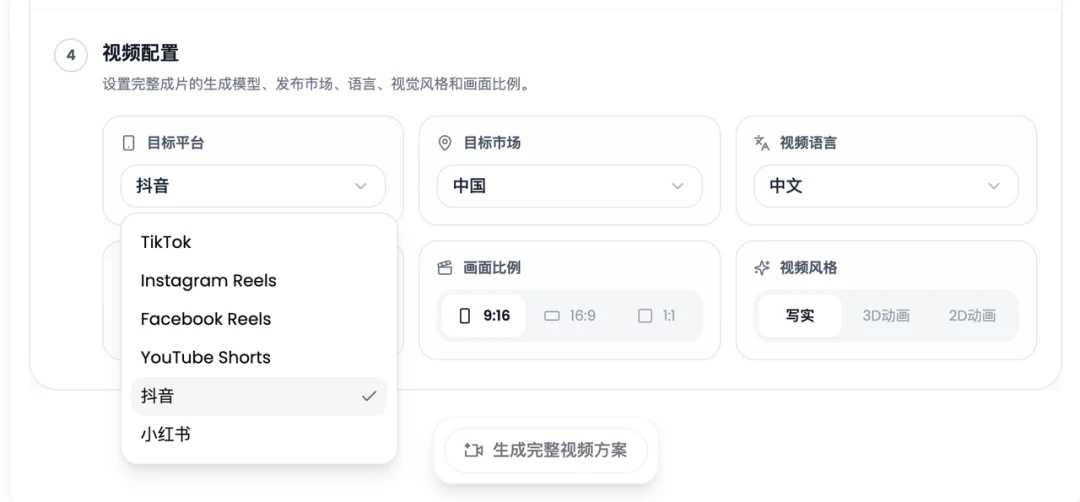
Vibbit platform, language, and aspect-ratio settings in the original Chinese interface.
However, traditional editing methods are linear: one editor, one computer, one timeline, producing videos one by one. This "artisanal workshop" style of production can barely cope when demand is small, but once demand scales up, the capacity bottleneck quickly becomes exposed.
What deserves even more attention is that this bottleneck cannot be solved simply by adding more people. The core contradiction of batch demand is this: repetitive work consumes a large amount of manpower, and that manpower could otherwise be invested in more valuable creative and strategic tasks. Adding people only increases capacity linearly; marginal efficiency gains are limited, while management costs continue to rise.
II. Re-understanding "Batch Editing": Not Acceleration, but a Reconstruction of the Production Method
Many people narrowly understand "batch editing" as "using software to quickly cut multiple videos." That is actually an oversimplification. True batch editing is not simply about increasing the production speed of individual videos, but about structurally transforming the video production process, shifting it from "piece-by-piece customization" to "systematic production."
The difference between the two is reflected in several dimensions:
| Dimension | Piece-by-piece customization | Batch editing |
|---|---|---|
| Production method | Linear, artisanal workshop style | Modular, systematic |
| Capacity ceiling | Limited by number of editors and working hours | Limited by tool efficiency and process design |
| Consistency | Depends on individual skill, high fluctuation | Template-based output, high stability |
| Trial-and-error cost | High cost for each version tested | Can generate test assets in batches at low cost |
| Manpower allocation | Large amount of time consumed by repetitive operations | Manpower concentrated on creativity and strategy |
In other words, the core value of batch editing does not lie in "cutting faster," but in separating repetitive, technical, and standardizable steps from manual operation, enabling teams to cover more content demands with the same resources. That is the underlying logic of why it becomes a core competency.
III. Why Can Batch Editing Become a Core Competency?
1. Cost efficiency: from "can't afford to make it" to "can afford to make it"
The demand for e-commerce video is enormous, but the budget for an individual video is usually limited. If a team can only rely on manual piece-by-piece editing, then when faced with demands for dozens of SKUs, multiple platforms, and multiple languages, it must either significantly compress the investment in each video (leading to lower quality) or abandon long-tail products (leading to insufficient coverage).
Batch editing uses automation and templating to greatly reduce the marginal cost of each video. This means teams can cover more video needs at lower cost, especially long-tail product videos and multi-version test assets that were previously "too expensive to make." This cost advantage will directly translate into profit margins in an environment where traffic costs continue to rise.
2. Testing speed: from "relying on intuition" to "data-driven"
The effectiveness of e-commerce videos ultimately needs to be validated through data. But under the traditional model, each creative direction tested requires a new edit, leading to long cycles and high costs, which forces teams to bet on only a few versions based on experience.
Batch editing makes "multi-version testing" possible. Teams can generate a large number of videos with different styles, pacing, and selling-point ordering in a short period, put them into A/B testing, and quickly filter out high-performing assets based on data feedback. This ability to "test at low cost and iterate based on data" is key for e-commerce teams to gain an information advantage in competition. Whoever finds effective creatives faster can use their traffic budget more efficiently.
3. Content coverage: from "hit products first" to "full coverage"
In the past, due to limited production capacity, teams could only prioritize making videos for a few hero products, while a large number of long-tail products lacked video assets for a long time. But on e-commerce platforms, long-tail products also need videos to improve conversion rates and search ranking weight.
Batch editing makes video coverage for long-tail products possible. Through template-based batch generation, even products with low sales can have basic demo videos. While individual videos from such full coverage may not be as refined as premium ones, this approach has practical significance for improving the overall content completeness of the store and the user experience.
4. Organizational capability: from "depending on individuals" to "depending on systems"
Traditional video production is highly dependent on a small number of skilled editors. If key personnel leave or their performance fluctuates, production capacity will be directly affected. The introduction of batch editing can standardize and tool-ize the production process, reducing over-reliance on individual skills.
This does not mean people are no longer important, but rather that the role of people shifts from "operator" to "process designer" and "quality controller." The team's knowledge is deposited in the system, not in the hands of individuals. This upgrade in organizational capability is the deeper value brought by batch editing.
IV. Vibbit's Capabilities and Role in Batch Editing
As an AI-driven video creation platform, Vibbit includes multiple capabilities directly related to batch editing in its product design. Based on official public information, the following features may have practical value for e-commerce teams building batch editing capabilities.
1. Batch mashup editing for product videos
Vibbit supports users uploading product images and selling-point copy, and AI batch-generates different styles of product-promotion videos. This feature directly addresses the pain point in e-commerce scenarios of "too many products, unrealistic to produce them one by one." Through templating and automation, teams can quickly convert product assets into multi-version videos, greatly shortening the production time of individual videos.

Vibbit batch editing: shot segmentation, structured editing, and creative variations.
2. Batch generation of ad creatives
According to official introduction, Vibbit's batch generation feature for ad creatives can produce up to 100 independent ad assets at a time. This batch capability provides the foundation for e-commerce teams to conduct large-scale creative testing. Teams can generate a large number of different versions in a short period, put them into ad platforms for testing, use data to filter out high-performing assets, and then concentrate resources to scale them up.
3. Multi-platform size adaptation
Different platforms have different requirements for video aspect ratios, and manual adjustment is time-consuming and error-prone. Vibbit supports one-click output of video sizes adapted for vertical, landscape, and square placements on TikTok, YouTube, Instagram, and other platforms. This effectively automates the repetitive step of "platform adaptation," reducing secondary processing work after batch production.
4. Automatic subtitle generation and multilingual adaptation
Subtitles are an important component of e-commerce videos, especially in muted viewing scenarios. Vibbit supports automatic subtitle generation and can match the timeline. At the same time, its multilingual video generation capability can generate versions in multiple languages in one pass with natural lip-sync. For cross-border sellers, this further reduces the batch production cost of multilingual videos.
5. Hit radar and hit breakdown
Batch editing is not just about "producing more," but also about "producing the right things." Vibbit's "hit radar" allows users to collect high-potential e-commerce ad creatives through a browser extension, while "hit breakdown and replication" can analyze the structure, pacing, and copy of competitors' viral videos and generate videos in a similar style. These features provide directional reference for batch production, so that batch editing is not blind mass production, but purposeful production of assets more likely to perform.
6. Long-video-to-short-video cutting
A livestream or a long product explanation video often contains multiple valuable segments. Vibbit's long-video-to-short-video feature can automatically cut up to 20 short video clips with viral potential, improving the utilization of existing assets and serving as an effective form of batch output.
It should be emphasized that Vibbit's features cannot completely replace human creativity and refinement. Batch-generated content may have limitations in refinement and personalization, and teams still need to intervene manually on key videos. However, as infrastructure for batch editing, it can significantly improve a team's overall production capacity and testing efficiency.
V. Batch Editing Is the Means, Systematic Capability Is the Goal
In the second half of the e-commerce video competition, the contest will no longer be about "whether you have videos," but about "whether you can continuously, efficiently, and cost-effectively produce effective videos." As the core means to achieve this goal, batch editing is becoming an indispensable capability for e-commerce teams.
But it must always be remembered: the value of batch editing does not lie in "cutting faster," but in freeing the team from repetitive labor and reallocating resources to areas that truly require human judgment. Tools are the lever, and systems are the moat. Teams that take the lead in building the capability of "batch production + data testing + rapid iteration" will gain the initiative in the next round of e-commerce content competition.