2026 Cross-Border E-Commerce Video Translation Review: Vibbit vs. HeyGen Cost-Effectiveness
Accuracy, Efficiency, and Total Cost: A Full Comparative Analysis
For cross-border sellers operating across multiple markets in Europe, North America, Southeast Asia, and the Middle East, video translation is no longer a nice-to-have — it is a foundational requirement for multi-market operations. Industry data shows that product videos with native-language voiceover deliver an average conversion lift of over 50% compared to generic English versions, and localization quality directly impacts campaign performance across all markets.
However, video translation remains a persistent pain point for cross-border operations: human translation is costly and slow, generic AI translation tools deliver inaccurate lip-sync and lower visual quality, and post-translation work — resizing, subtitle adjustment, platform formatting — often costs more than the translation itself.
Based on the latest official credit rules and hands-on backend testing data from both platforms as of October 2026, this report focuses on video translation and multi-language localization. It delivers an in-depth comparison across four dimensions: translation modes, accuracy, supporting features, and scenario-based total cost, to help you find the optimal solution for multi-market localization.
I. Pain Points of Generic AI Video Translation Tools for E-Commerce
General-purpose video translation tools like HeyGen perform well for general meetings and long-form video translation, but when deployed for short-form video localization in cross-border e-commerce, they commonly suffer from four core issues.

1. Tiered Translation Modes: Precision Lip-Sync Locked Behind Higher Tiers
Generic tools universally use a “low-price base tier, premium features at a premium” model, with translation quality split into three tiers — higher fidelity comes at a higher per-minute rate.
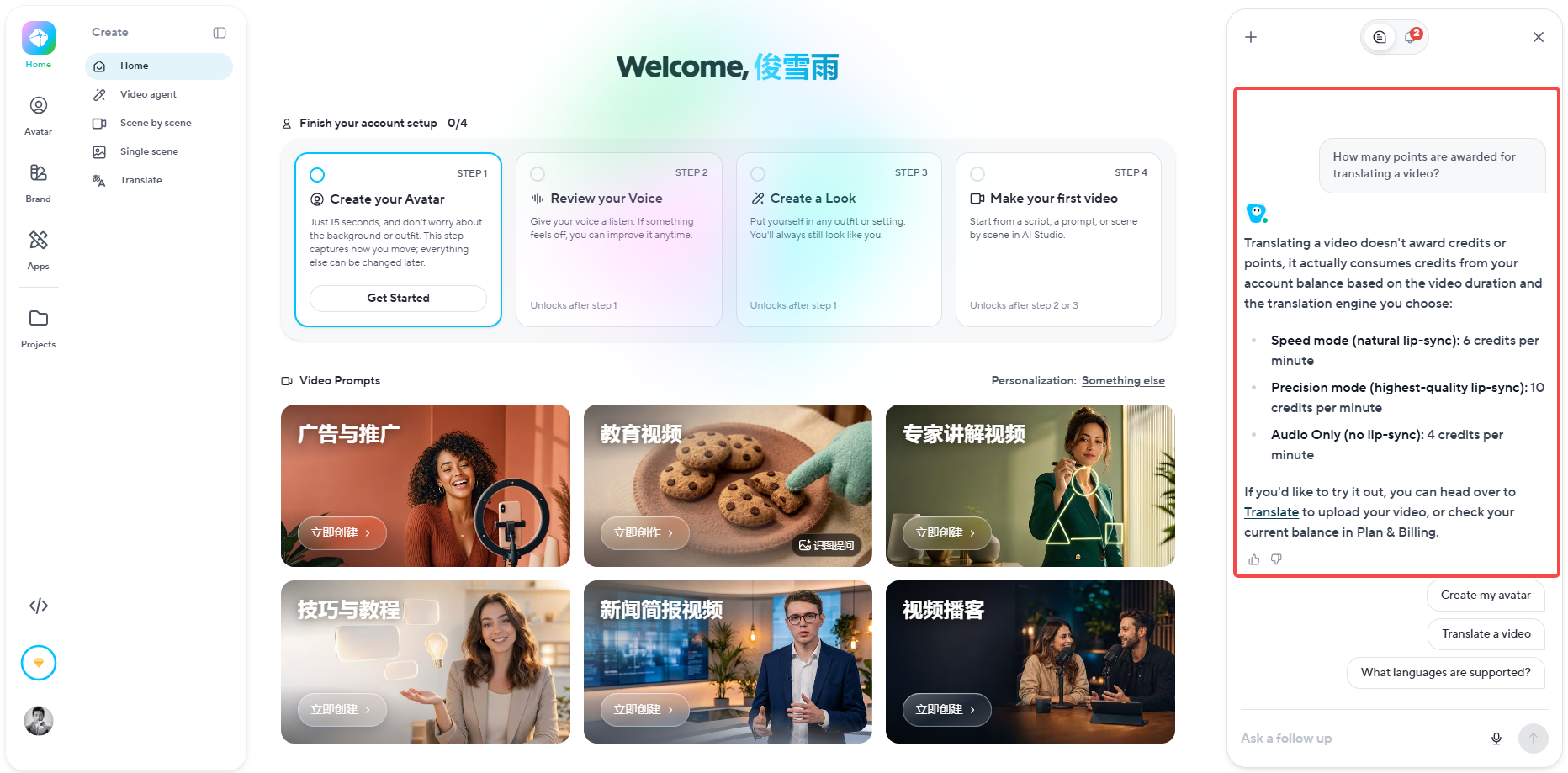
Per the official 2026 HeyGen credit rules, AI video translation is billed per minute as follows:
- Audio-only dubbing (no lip-sync): 4 credits / minute (~0.07 credits / second)
- Fast mode (basic lip-sync): 6 credits / minute (~0.1 credits / second)
- Precision mode (high-accuracy lip-sync): 10 credits / minute (~0.17 credits / second)
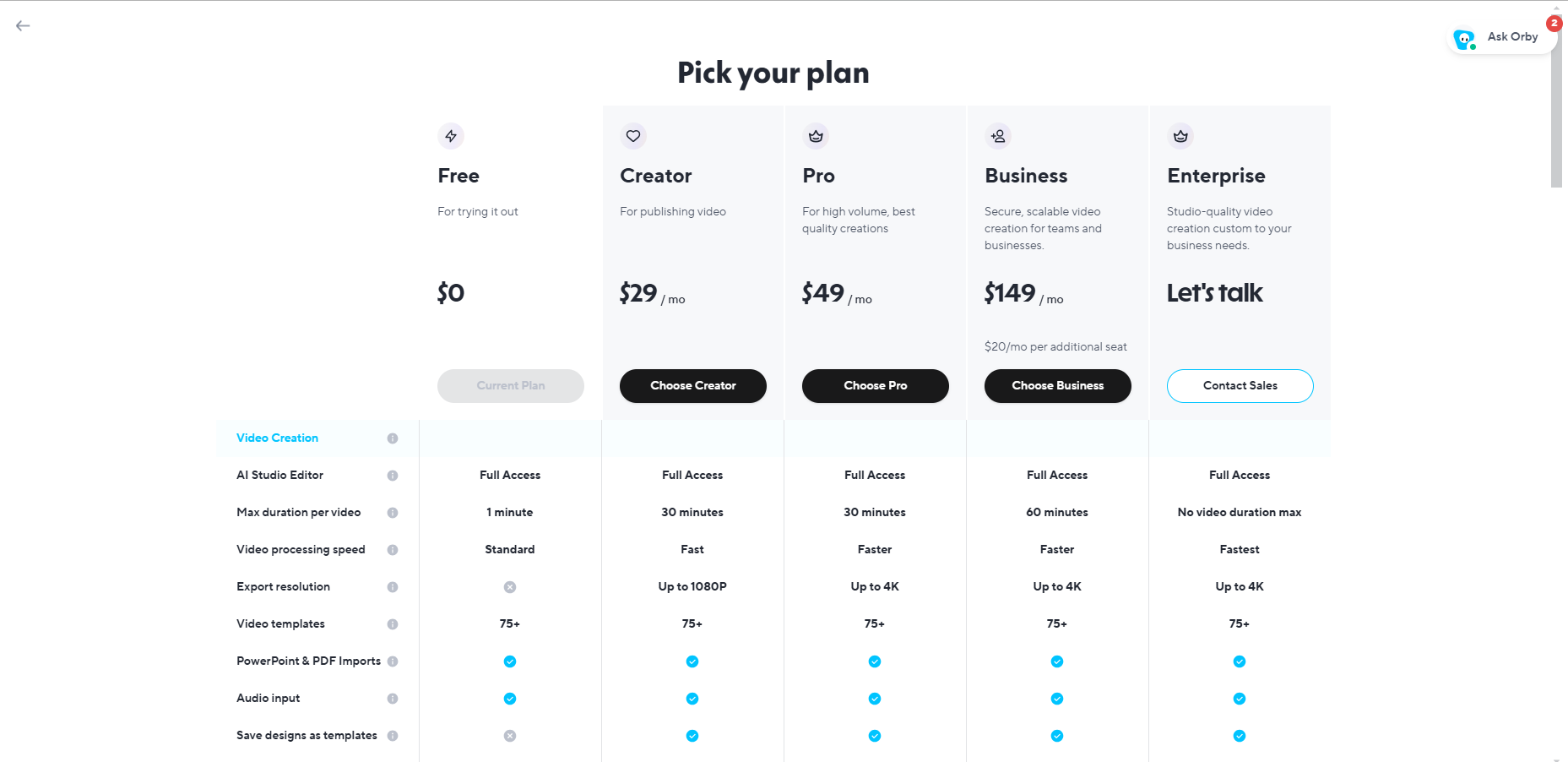
On paper, the base audio-only rate looks very low. But for standard e-commerce promotional videos, the precision lip-sync mode costs 2.5x the base rate. The entry-level Creator plan ($29/month) includes only 600 credits and only unlocks basic translation mode. To access precision lip-sync, users must upgrade to Pro or Business tiers, doubling the monthly fee.
2. Translation Only, No E-Commerce Post-Processing Support
The core capability of generic tools is focused narrowly on “translation + lip-sync” itself. But e-commerce localization requires far more: resolution adaptation for different platforms, subtitle safe zone adjustment, multi-language title generation, subtitle file export, batch naming and other supporting features are mostly absent or very basic.
A finished translation often requires multiple secondary processing steps — “resize → adjust subtitles → add titles → reformat → rename” — before it can go live on the target storefront, driving up operational costs and slowing down workflows.
3. Low Batch Efficiency: Per-Video Processing Drives Up Costs
Most generic tools use a linear workflow of uploading and translating one video at a time. For sellers needing to translate dozens or hundreds of product videos in bulk, the upload-configure-export per-video model is extremely inefficient, with labor costs scaling linearly with video volume.
For catalog sellers with large SKU counts operating across multiple markets, this one-by-one approach cannot support full-catalog multi-language localization.
4. Subtitle & Format Mismatch With Platform Requirements
Most generic tools only output universal video and subtitle specifications. Subtitle norms, cover frame requirements, and aspect ratios differ across e-commerce platforms, requiring sellers to manually adjust parameters for every single video. This creates heavy workloads and introduces errors that can hurt campaign performance.
II. Vibbit: An E-Commerce-Focused Video Translation & Localization Solution
Vibbit.ai’s video translation capability is an end-to-end solution built specifically for cross-border e-commerce multi-market localization. It is not just standalone video translation — it delivers full-stack localization covering “translation + lip-sync + subtitles + platform adaptation + batch processing.”
1. Full Lip-Sync Translation with Precise Mouth Alignment
Vibbit uses full lip-sync translation technology, where the on-screen speaker’s mouth movements precisely match the target language for natural, seamless results that meet commercial publishing standards.
It supports natural voiceover in 30+ languages, covering all major cross-border markets in Europe, the Americas, Southeast Asia, and the Middle East to fit localization needs across different storefronts.
2. Unified Translation + Digital Human + Motion Workflow
Unlike the separate pricing model of generic tools — where translation and digital humans are billed separately — Vibbit supports unified translation processing for digital human videos: lip-sync and motions are automatically matched to the target language at the same time as translation, with no separate configuration or separate billing. One video can generate multi-language versions in a single pass.
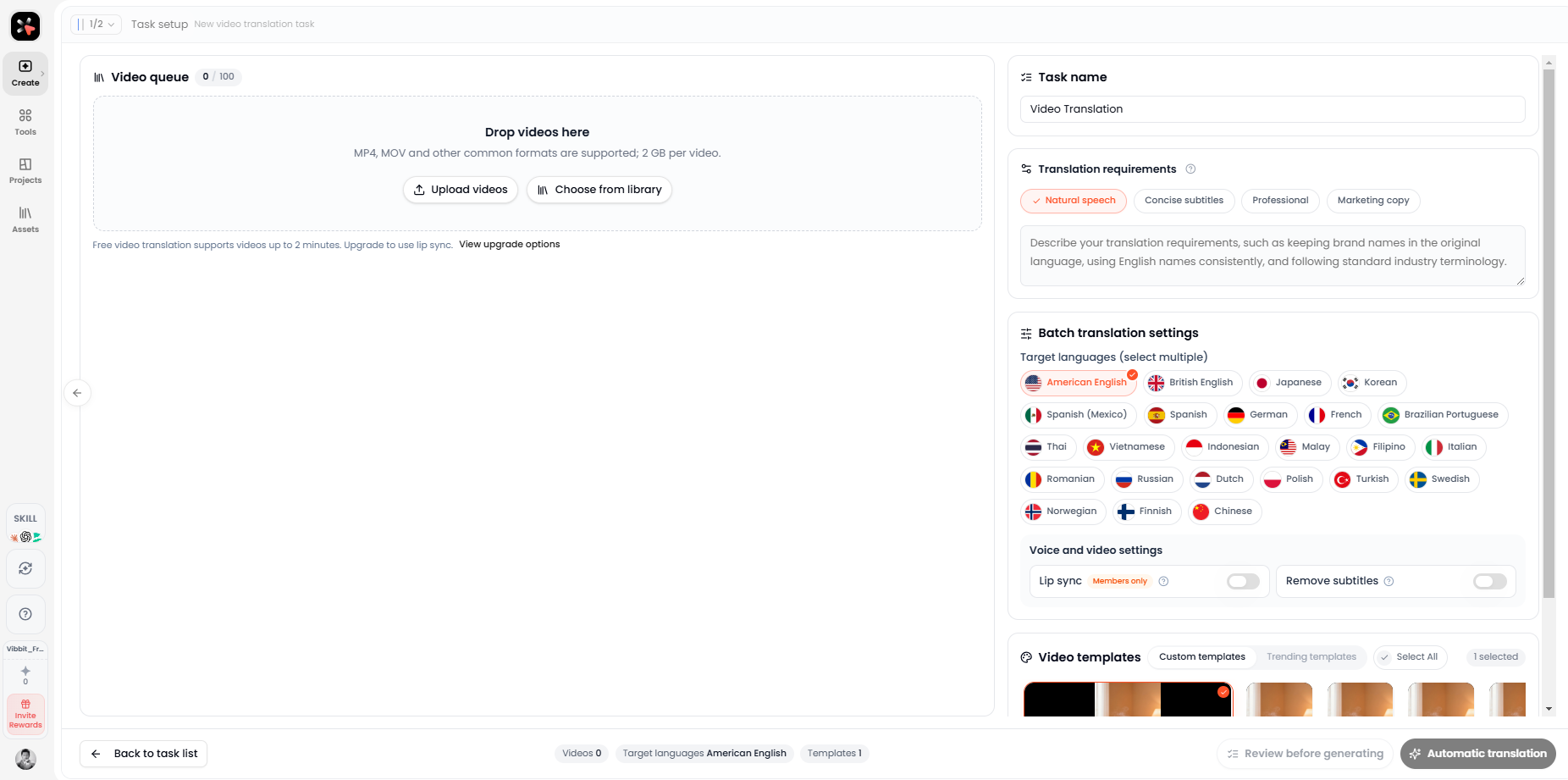
3. Batch Translation: Multi-Language Generation for Video Batches
Built for e-commerce bulk localization needs, the tool supports batch video import. Users set target languages once and generate multi-language versions in bulk, no per-video upload and configuration required.
Combined with batch product generation capabilities, it also enables end-to-end automation of “product link → multi-language digital human video”, generating localized product videos for different storefronts in one click for multiples of gains in efficiency.
4. Multi-Platform Optimization: Subtitles & Resolution Auto-Matched to Platform Standards
Deeply optimized for the rules of major cross-border e-commerce platforms, translated videos automatically adapt to corresponding platform standards:
- Automatically matches TikTok 9:16 vertical, Amazon 16:9 / 1:1 and other standard resolutions, subtitle safe zones, and cover frame specifications.
- Automatically generates product title copy and local trending hashtags in the target language.
- Supports batch export with SKU + language file naming for easy bulk upload to store backends.
5. Standalone Subtitle Export for Secondary Editing
Supports per-language SRT subtitle file export for easy secondary editing, proofing, or cross-platform distribution, no manual subtitle extraction required.
Translation subtitles can be downloaded and adjusted separately to fit different platform subtitle norms and review requirements.
6. Integrated With Full E-Commerce Workflow
Translation capabilities are natively integrated with core e-commerce features: translated videos can go straight into 1:1 element remake, viral replication, batch packaging and other downstream operations, no tool switching required. The entire workflow from generation to translation to optimization happens on a single platform.
III. Head-to-Head Comparison: Vibbit vs. HeyGen (Translation Dimension)
1. Translation Capability Comparison
| Comparison Dimension | Vibbit | HeyGen |
|---|---|---|
| Translation mode | Full lip-sync translation, single standard | 3 tiers: audio-only / fast / precision, priced progressively |
| Supported languages | 30+ languages, covering major cross-border markets | 20+ languages |
| Lip-sync accuracy | Commercial-grade for e-commerce | High in precision mode, basic in entry mode |
| Unified digital human + translation | ✅ Unified workflow, single-pass generation | ❌ Separate configuration, separate billing |
| Batch translation | ✅ Batch import and batch generation | ❌ Per-video upload and processing |
2. Supporting Feature Comparison
| Feature | Vibbit | HeyGen |
|---|---|---|
| Multi-platform format optimization | ✅ Auto-matches platform resolution & subtitle norms | ❌ Universal output, manual adjustment required |
| Standalone subtitle export | ✅ SRT export supported | ✅ Export supported |
| Multi-language title generation | ✅ Auto-generates language-specific titles & hashtags | ❌ Not available |
| Batch named export | ✅ Batch naming by SKU + language | ❌ Manual renaming required |
| Post-translation editing | ✅ Direct remake, packaging, etc. | ❌ Requires export and external tools |
3. Tier & Translation Access Comparison
| Tier | Vibbit Translation Access | HeyGen Translation Access |
|---|---|---|
| Free tier | Full lip-sync translation, base credit allowance | Limited monthly credits, basic translation mode only |
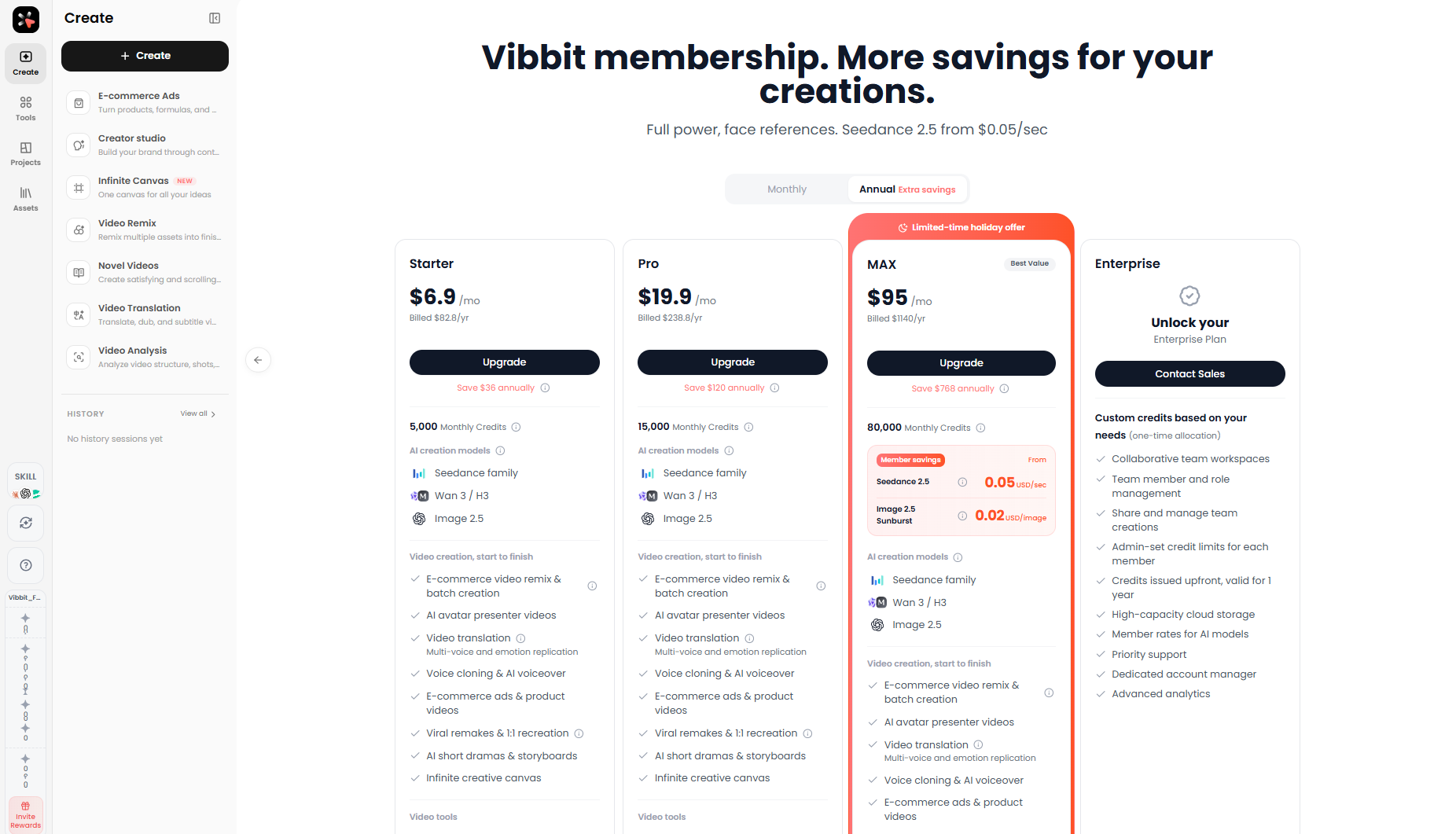
| Entry tier | Starter: $6.9 / month, 5,000 credits / month Full translation functionality available |
Creator: $29 / month, 600 credits / month Basic translation mode only, precision mode locked |
| Mid-tier | Pro: $19.9 / month, 15,000 credits / month Full feature access, batch support |
Pro: $49 / month Unlocks precision translation mode |
| Premium tier | MAX: $95 / month, 80,000 credits / month Best per-unit pricing for mass production |
Business: $72 / month, 45 minutes of credits Enterprise commercial authorization |
IV. Real-World Cost Calculation: Per-Minute Price vs. Total Localization Cost
E-commerce tool selection should never be judged only by the per-minute price of translation alone. The core metric is the total cost to deliver multi-language localization — you are not buying “one minute of translated video”; you are buying “a batch of market-ready localized videos.” This includes translation, lip-sync, secondary processing, batch handling and more, plus labor costs and opportunity cost of time.
1. Baseline Calculation: Per-Minute Translation Cost Comparison
Based on official credit rules from both platforms, we calculate the unit cost of the precision lip-sync translation standard commonly used in e-commerce.
Standard e-commerce configuration: precision lip-sync translation
| Plan | Credits per minute | Cost per credit | Translation cost per minute |
|---|---|---|---|
| HeyGen Pro (Precision mode) | 10 credits | ~$0.0483 | ~$0.48 / minute |
| Vibbit Starter (Full lip-sync) | ~437 credits | ~$0.00138 | ~$0.60 / minute |
| Vibbit MAX (Full lip-sync) | ~437 credits | ~$0.00119 | ~$0.52 / minute |
Objective conclusions:
- On pure per-minute translation pricing alone, HeyGen’s premium tier has a modest advantage.
- But HeyGen’s entry tier cannot use precision translation mode — upgrading to Pro is required to meet commercial standards.
- When stacked with common e-commerce configurations like digital humans and motion, HeyGen’s total cost rises significantly, while Vibbit’s unified bundled pricing delivers a clearer value advantage.
2. Scenario Calculation: Total Cost of 50 Videos with 2-Language Localization
We take the most common cross-border seller scenario — 50 x 15-second TikTok videos per month + 2-language localization — and calculate the full cost including tool subscription, manual labor, and secondary processing.
Step 1: Tool Credit Consumption
Per video (15-second source × 2 languages = 30 seconds of translation runtime):
| Consumption Item | Per video (30 sec translation) | Total for 50 videos |
|---|---|---|
| 2-language precision translation | HeyGen Precision mode: 5 credits (10 credits/min × 0.5 min) Vibbit Full lip-sync: 218.5 credits |
HeyGen: 250 credits Vibbit: 10,925 credits |
Corresponding tiers and tool fees:
- HeyGen: The Creator tier only supports basic translation mode. To meet commercial precision lip-sync standards, users must upgrade to the Pro tier ($49/month), which provides enough credits for translation demand. If digital human capabilities are also required, further upgrading is necessary.
- Vibbit: The Pro tier’s 15,000 credits fully cover translation demand, with a monthly subscription fee of $19.9. Unused credits roll over to subsequent months.
Step 2: Labor & Operations Cost
- HeyGen: Upload videos one by one, set translation languages, adjust dimensions, subtitles, and formatting after export, rename each file manually.
- Manual time per video: ~3 minutes
- Total time for 50 videos: ~150 minutes (2.5 hours)
- At ~$18 / hour for cross-border operations staff: ~$45 total labor cost
- Vibbit: Batch import videos, set target languages once, auto-adapt to platform formats, batch named export.
- Total batch operation time: ~20 minutes
- Labor cost: ~$6
Step 3: Additional Feature Costs
- HeyGen lacks platform format optimization, batch naming, multi-language title generation and other features, requiring manual secondary processing.
- Estimated extra labor cost: ~$20 / month
- Vibbit includes all of these natively in the subscription — no extra charge.
Total Cost of Ownership Comparison
Based on 50 x 15-second videos per month, 2-language localization, meeting full commercial publishing standards:
| Cost Category | HeyGen Pro Tier | Vibbit Pro Tier |
|---|---|---|
| Tool subscription fee | $49 | $19.9 |
| Manual labor cost | ~$45 | ~$6 |
| Secondary processing cost | ~$20 | $0 |
| Total monthly cost | ~$114 | ~$25.9 |
Core conclusion:
- On pure per-minute translation pricing alone, HeyGen appears to have a small advantage.
- But by real e-commerce commercial standards, factoring in precision mode upgrades, manual labor, and secondary processing, Vibbit’s total cost in localization scenarios is approximately 77% lower.
- The more videos and the more target languages, the wider the batch efficiency gap grows — and the stronger Vibbit’s overall advantage becomes.
3. Cost Trap Breakdown: Why Lower Unit Price Leads to Higher Total Spend
HeyGen’s translation price advantage is essentially a pricing strategy of “low-price entry tier with premium fidelity and supporting features missing.” Applied to e-commerce localization scenarios, there are three hidden cost traps:
- Tiered fidelity pricing: Base mode is cheap but not commercially usable; precision lip-sync requires upgrading to a higher-priced tier.
- Missing supporting features: Platform adaptation, batch processing, subtitle optimization and other e-commerce essentials are absent, driving up labor costs.
- Disconnected workflow capabilities: Translation, digital humans, and editing are billed and operated separately, creating fragmented workflows and low efficiency.
V. Buyer’s Guide: The Best Fit for Different Needs
Neither tool is universally better — the optimal choice depends on your business scenario.
Scenarios Where HeyGen Is the Better Choice
- Translation is primarily for long-form video, meetings, and corporate training, with minimal short-form video translation.
- Very high translation accuracy requirements, low video volume, and low cost sensitivity.
- No need for batch processing or e-commerce platform adaptation.
Scenarios Where Vibbit Is the Better Choice
- Cross-border multi-market operations requiring frequent video localization.
- High product video volume requiring batch translation and batch publishing.
- Preference for unified translation, digital human, remake, and batch e-commerce capabilities on a single platform.
- Budget-sensitive operations seeking predictable localization costs and higher operational efficiency.
Optimal for Enterprise Sellers: Dual-Tool Strategy
For large teams operating across multiple markets, we recommend a dual-tool strategy:
- Vibbit as the primary localization system: handles bulk multi-language translation of day-to-day product videos and promotional short-form videos, ensuring baseline capacity and efficiency.
- HeyGen as a premium supplement: produces multi-language versions of premium long-form content such as official brand films and executive speeches, for brand-level localization.
Together they create a two-tier system — “high-volume product localization + premium brand localization” — balancing efficiency and quality.
VI. Conclusion
HeyGen and Vibbit represent two distinct paths in AI video translation: the former follows a general-purpose route, pursuing translation accuracy across all scenarios; the latter follows a vertical e-commerce route, pursuing mass-production efficiency across the full localization stack.
If your business relies heavily on cross-border e-commerce multi-market video localization, generic tools hit a hard ceiling — precision fidelity locked in expensive tiers, no batch processing capability, missing e-commerce supporting features, and high secondary processing costs. Behind the seemingly low base price are layers of hidden costs.
Vibbit fills exactly this gap. It integrates full lip-sync translation, batch processing, multi-platform optimization, subtitle export, and full e-commerce workflow connectivity on a single platform, with pricing tailored to sellers of all sizes. You never have to upgrade to an expensive plan just for precision results, and you never have to jump between multiple tools. You can complete full-catalog multi-language localization at a lower total cost.
Looking at industry trends, as AI translation capabilities become commoditized, batch efficiency, workflow integration, and scenario fit will become more important differentiators than raw point accuracy. For cross-border e-commerce, vertically integrated translation solutions deeply embedded in e-commerce workflows will increasingly become the standard for scaled multi-market operations.