Smart Voiceover and Caption Matching for AI Short Drama: A Breakdown of Vibbit's Automation
Production efficiency for AI short drama is being redefined.
Production efficiency for AI short drama is being redefined. Scripts can be generated by a large model, visuals rendered by AI, characters driven by digital humans — but when it comes to voiceover and captions, many teams drop back into the manual era: human voice recording takes time and costs money, ordinary TTS tools lack emotional range, and caption timing is repetitive labour that starts at 40 minutes an episode. Vibbit's smart voiceover and caption matching exist to close that last mile between picture and finished episode. This article works through the principles, the workflow and the pitfalls to show how Vibbit genuinely automates voiceover and captions.
I. The break in the AI short drama chain: the manual islands before picture meets sound
A typical AI short drama flow runs: AI generates the script → AI generates the storyboard visuals → a digital human drives the performance → a silent video comes out. The first half of that chain is already highly automated, but between silent video and finished episode sit two manual islands.
Island one: voiceover. A 2-minute episode may carry more than 30 lines across several characters. Human voice recording means scheduling talent, booking a booth and repeated takes, and changing one line means recording again. Basic TTS tools are fast but single-timbred and emotionally flat, unable to match the emotional tension short drama needs — an angry demand, a tearful complaint, a smug taunt. Those fine distinctions decide whether the dialogue plays at all.
Island two: captions. Timing every line by hand means listening and adjusting over and over. AI short drama usually has even denser dialogue, because an AI character can talk without pausing, which makes caption alignment more work rather than less. And once the voiceover version changes, the captions have to be realigned.
Vibbit's approach: use speech recognition to generate the timeline automatically, replace single-voice TTS with a multi-character AI voiceover engine, and use an automatic sync mechanism to keep captions and voiceover matched at all times. Those three things combine into one automated flow, turning manual islands into a system route.
II. Smart voiceover: driven by multi-character timbres and emotion tags
Vibbit's voiceover feature is not simply text to speech but a voiceover engine deeply optimised for the short drama scenario, with two core capabilities.
A multi-character timbre library. Short drama needs each character to have a distinct voice to establish recognisability. Vibbit ships with a timbre library covering different genders, ages and vocal characteristics, and the team can assign a dedicated timbre per character: a deep, forceful young male voice for the male lead, a clear and gentle young female voice for the female lead, a cold middle-aged male voice for the antagonist. Configure once and the whole series applies it automatically, so character voices stay consistent and viewers can tell characters apart by sound alone.
Emotion tags and speed control. The line "you finally came" lands completely differently delivered with delight versus with resentment. Vibbit supports tagging each line in the data table with an emotion — angry, sad, joyful, sarcastic, tense — and the system adjusts tone, pace and stress automatically during voiceover. The team can also specify a speed multiplier manually: faster in a heated argument, slower in a heartfelt monologue.
Voiceover is generated in bulk in the cloud, and dialogue for dozens of episodes can finish in minutes. When one line changes, you only update the text in the data table and regenerate that line's audio; nothing else is affected. That flexibility is what lets AI short drama genuinely revise and re-voice as it goes.
III. Automatic caption matching: from manual timing to voice-driven sync
The core logic of Vibbit's caption matching is automatic sync against the voice timeline, which retires manual timing altogether.
The flow:
Speech recognition generates the timeline. The system runs speech recognition over the AI or human voiceover and generates start and end points for every line automatically. With AI voiceover the timeline can be even more precise, because the voiceover engine itself can output a timestamp per character.
Caption text aligns automatically. The dialogue text in the script data table is matched against the speech recognition result to generate a time-coded caption file automatically. The team never types a timecode — it only proofreads the text for accuracy.
Caption styling applies automatically. Typeface, size, colour, position and outline are applied from the preset template. Different characters can use different caption colours to strengthen recognisability.
Automatic resync after a voiceover change. If regenerating one line changes the timeline, Vibbit realigns that caption and its neighbours automatically, with no manual adjustment.
This flow compresses caption production from 40 minutes an episode to under 5, with higher accuracy, avoiding the drift and dropped frames that manual timing commonly produces.
IV. Voiceover and captions working together: three automation details behind sync
Voiceover and captions have to work with the picture. Vibbit's automation here shows up at three levels.
Phoneme timestamp output for lip sync. For a digital human character in an AI short drama, how well the mouth matches the voice affects the viewing experience directly. Vibbit's voiceover engine can output phoneme-level timestamps, which the team uses to adjust the digital human's mouth animation so lip movement corresponds precisely to the sound. Vibbit does not drive lip animation itself, but the timing data it outputs is the key input for downstream lip sync.
Caption display pacing control. How long a caption stays on screen has to match both reading speed and voiceover duration. Vibbit calculates display pacing automatically from voiceover length and caption length. Where a caption runs long and the voiceover time is short, the system suggests splitting it or extending that shot's duration a little.
Multilingual version sync. When an AI short drama goes global, Vibbit can generate voiceover and matching captions in several languages at once. Voiceover duration differs per language, and the caption timeline is rematched automatically so every translated version stays in sync. That is a level of complexity manual work can barely handle.
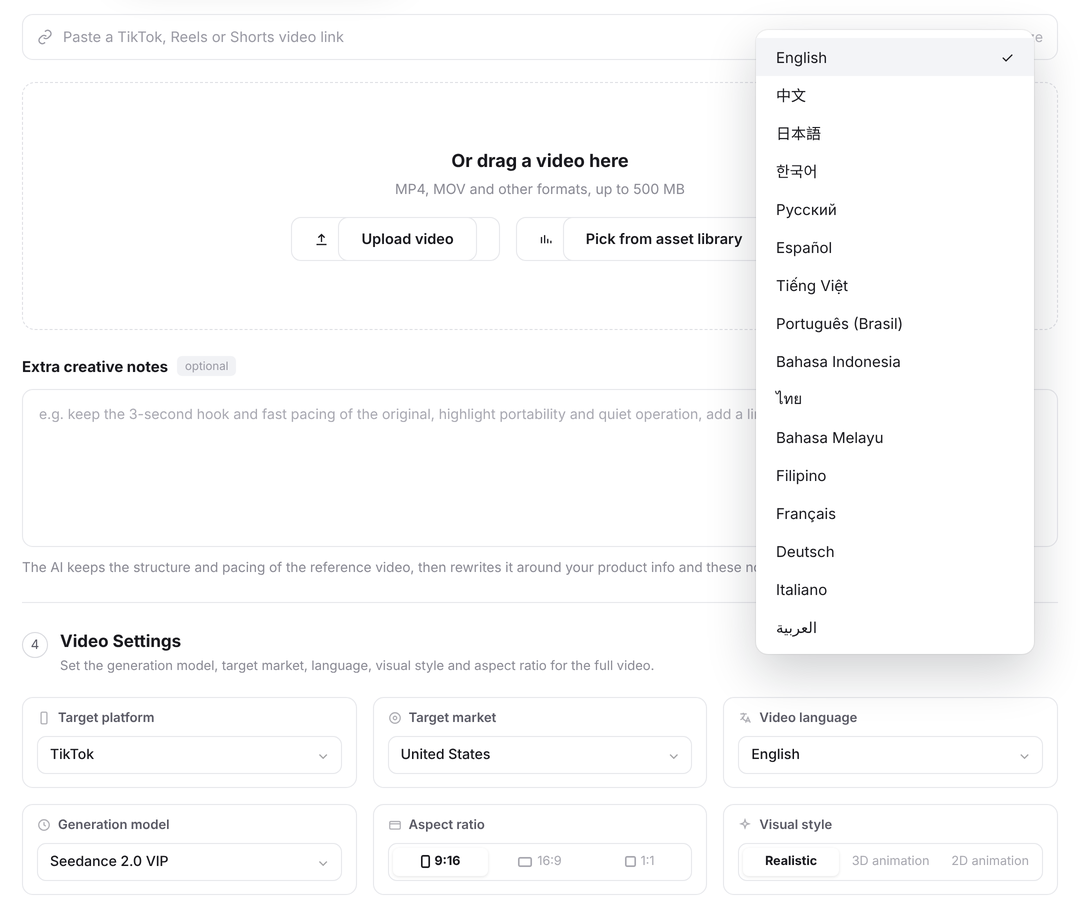
V. Smart voiceover and caption matching in three steps
Completing voiceover and caption matching for an AI short drama in Vibbit usually goes in three steps.
Step one: import the picture and the script data table. Load the AI-generated silent visuals into Vibbit along with the structured script data table, which holds each line's character, text, emotion tag and speed requirement.
Step two: configure character timbres and batch-generate the voiceover. Assign a timbre per character, set the emotion tag mapping rules and submit the voiceover task. Vibbit generates all the dialogue audio in bulk in the cloud and aligns it to the picture timeline automatically.
Step three: auto-match captions and output. The system generates captions from the voiceover timeline and applies the preset styling. Once the team has proofread the text, choose the output format and target ratios and batch render.
From silent picture to a finished episode with voiceover and captions, a 2-minute episode can be completed in 10 minutes, and changing any line regenerates its voiceover and caption quickly.
VI. Automation is the amplifier of AI short drama's efficiency advantage
AI short drama's real advantage is not that AI was used at some single stage but that the whole production chain is automated end to end. Visuals can be AI-generated, but if voiceover and captions fall back to manual mode, the efficiency advantage of the entire chain is cancelled out. Vibbit's smart voiceover and caption matching fill in the stage most easily overlooked in AI short drama production and most likely to slow the whole thing down.
Industrialising AI short drama is not single-point automation but whole-chain system capability across script, picture, voiceover and captions. Vibbit turns voiceover and captions from manual steps into data-driven automatic processes, so production efficiency genuinely matches the speed at which content is generated. Once that last mile is open, a team can shift its attention from how to get the sound on to how to tell the story well, and build a real speed advantage in AI content.