Producing Multilingual Versions of AI Short Dramas at Scale: Vibbit's Auto-Translation and Subtitle Adaptation
Short drama going overseas is becoming a new growth area for the content industry.
Short drama going overseas is becoming a new growth area for the content industry. An AI short drama whose script and pacing have already been validated at home often has cross-cultural potential. But pushing a 60-episode series of 1–2 minute episodes into overseas markets involves far more than "translating the lines." Character-length differences between languages cause subtitles to overflow; different platform aspect-ratio rules force subtitle positions to be readjusted; cultural taboos in different regions require sensitive wording to be avoided; and managing and batch-exporting all those language versions is a headache in itself. Vibbit's auto-translation and subtitle adaptation features are built for exactly this situation — they upgrade multilingual production from the slow "translate episode by episode and subtitle by hand" model into an efficient pipeline of automatic translation, intelligent adaptation and batch generation.
I. The real pain: translation is only step one — adaptation is the deep water
Many teams assume multilingual short drama means "translate the lines into English and put subtitles on." In practice, a great deal of adaptation work begins after the translation is done.
Character-length differences. Chinese lines are usually shorter than English, while the equivalent German or Russian is often longer. In the same subtitle box, a Chinese line might fit 20 characters where German fits only 15. Without automatic line breaking and font-size adjustment, subtitles overflow the frame or crowd onto the actor's face.
Platform aspect ratios and safe areas. TikTok's 9:16 and YouTube Shorts' vertical format look identical, but the platforms have different requirements for the bottom safe area, and with platform UI overlaid the subtitles can end up obscured. Adjusting subtitle position by hand for every platform multiplies the work.
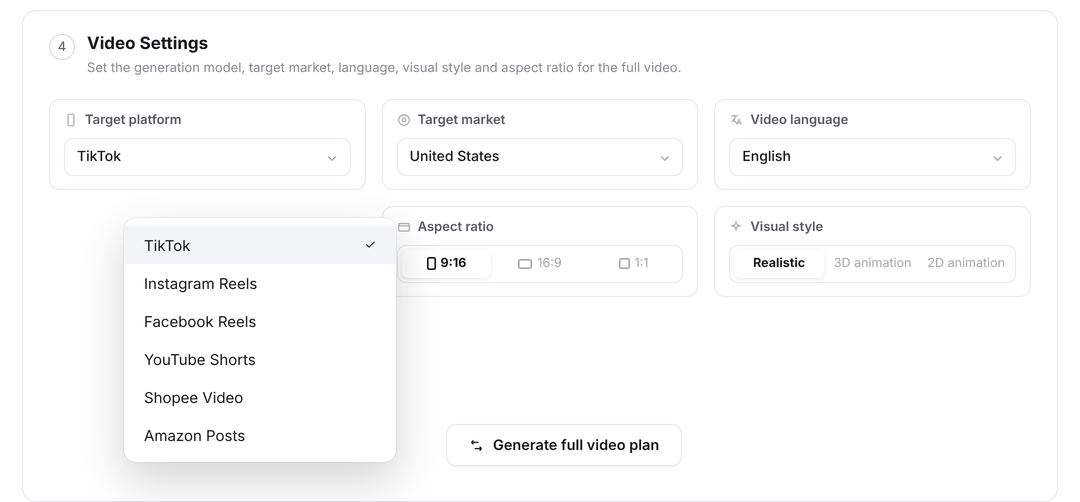
Version management across languages. For a 60-episode drama in five target languages, every language version needs its own subtitle file, voice track (if any) and export. Managing that by hand makes naming chaos, missed updates and mismatched versions almost unavoidable.
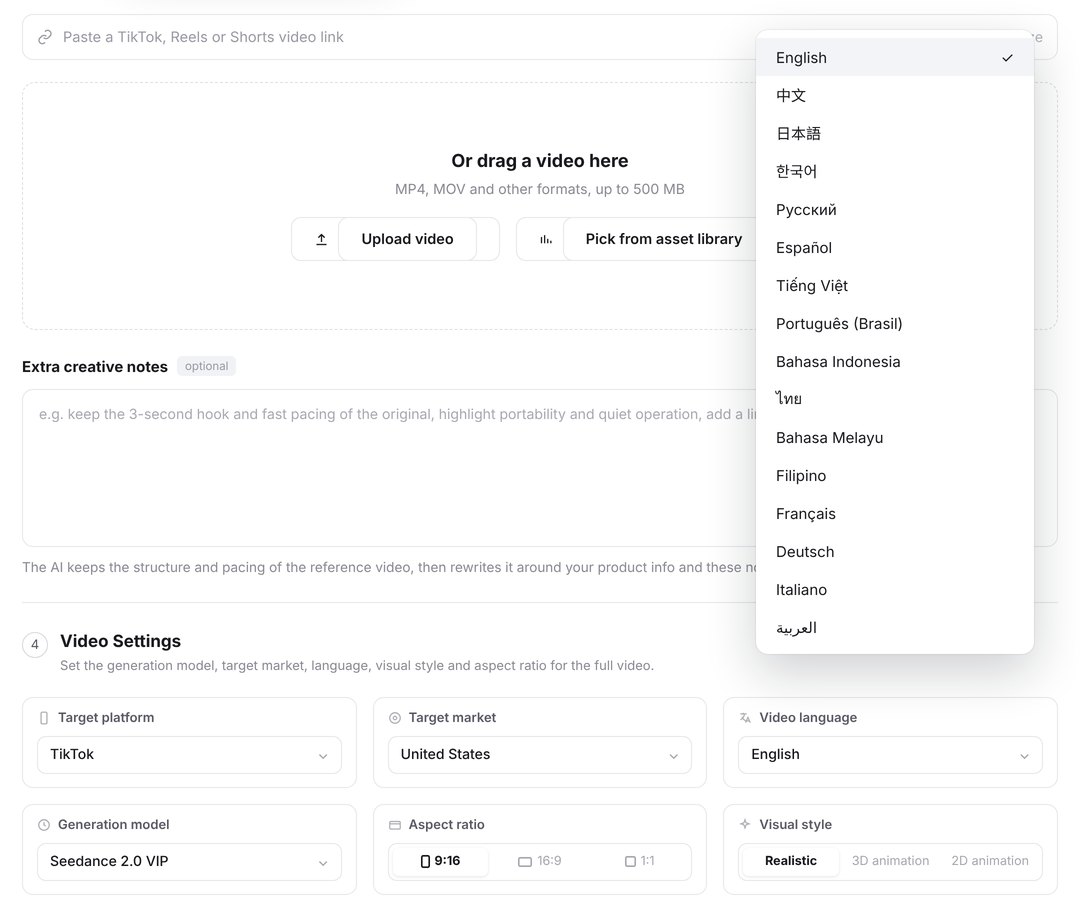
Vibbit's answer is to bring both translation and subtitle adaptation into a templated batch production system, so every language version is generated and adapted automatically while all versions keep the same structure.
II. The core capabilities: translation engine, intelligent typesetting and multilingual templates
Vibbit's auto-translation and subtitle adaptation rest on three modules.
The translation engine. Vibbit connects to mainstream machine translation services and also accepts translated text that a team has already proofread. For the conversational copy typical of AI short drama, the system recognises the speech and generates time-coded subtitles, then batch-translates the source-language subtitles into the target languages. The output can feed subtitle generation directly, or be exported for human review and brought back in — efficiency and quality both covered.
Intelligent subtitle typesetting. This is what separates Vibbit from an ordinary subtitle tool. The system adjusts line-break position, font size and text-box width according to the character length and rendered width of the target language. If a translated line runs long, it is split across two lines while the reading rhythm stays consistent with the source. Vibbit also detects where people are in the frame and places subtitles inside the safe area, so faces and key action are never covered.
The multilingual template system. A team can create several language templates for one drama project, each with its own font, size, subtitle position, colour and outline style. The English version might use a sans-serif face with subtitles centred low; the Japanese version a face suited to its typography, with subtitles slightly higher to avoid the platform UI; the Arabic version needs automatic right-to-left layout. Vibbit's template engine handles these language characteristics and applies the matching template automatically during batch rendering.
III. From one language to many: a three-step batch workflow
Producing multilingual versions of an AI short drama in Vibbit normally runs in three steps.
Step one: import the source footage and generate source-language subtitles. Load the drama's video files into the Vibbit asset library, choose the source language, and the system transcribes the speech into time-coded subtitles. Proofread the source subtitles at this point, because every subsequent translation is built on them.
Step two: choose the target languages and translate automatically. In project settings, select the versions you need — English, Japanese, Spanish, Indonesian. Vibbit translates the source subtitles and drops them into the matching language templates. If you have a professional translation team, export the text for polishing and import it again.
Step three: batch render with automatic adaptation. Once the render task is submitted, Vibbit processes all language versions in parallel in the cloud. Each one adjusts subtitle style, position and line breaking according to its template, and outputs in the aspect ratios the target platforms require (9:16, 1:1, 16:9). When rendering finishes, files are named automatically as "episode_language_platform," so the team can distribute them straight to the account matrix for each region.
The point of the whole process: translate once and adaptation is automatic; build the template once and reuse it across languages; render one batch and distribute globally.
IV. The details of subtitle adaptation: from legible to comfortable
The user experience of a multilingual short drama depends heavily on whether the subtitles are comfortable to read. Vibbit makes several key optimisations here.
Reading-speed control. Different languages read at different speeds; an English reader needs a longer dwell time than a Chinese reader. Vibbit fine-tunes subtitle duration to the average reading speed of the target language. Where a translated line runs long, the system extends that subtitle slightly and compresses the transitions around it, so the overall pacing does not break down.
Automatic safe-area avoidance. Short drama frames often hold a half-body close-up, and a subtitle sitting over the eyes or mouth ruins the shot. Vibbit's adaptation module analyses face positions in the frame and shifts the subtitle box up or down to clear them. In multi-character dialogue it can also adjust subtitle alignment by speaker position, making it easier for viewers to match line to character.
Culturally sensitive wording and localised substitution. Automatic translation can produce phrasing that does not sit well in the target region. Vibbit supports preset sensitive-word lists and substitution rules, so wording that is fine in one market but contentious in another is automatically replaced with something neutral. Teams can also maintain a localisation glossary in the data table, keeping brand names, product names and core concepts consistent across every language version.
Font licensing and rendering compatibility. Multiple languages mean multiple character sets, and font choice directly affects how the render looks. Vibbit ships several open-source or commercially usable multilingual fonts, and teams can upload fonts they have licensed. The system checks the target language's character set against the font to prevent missing-glyph boxes.
V. Batch management: one project, many languages, one iteration
Short drama going overseas usually runs on continuous updates: after the first 60-episode season goes live, pacing and content in later episodes get adjusted from the data. If one line in episode 10 needs changing, every language version has to change with it.
This is where Vibbit's version management earns its place. When a source subtitle changes, the system flags every affected translation, and the team can choose to retranslate only what changed or retranslate everything. If a line in episode 10 goes from "I won't give up" to "I'll never back down," only that line is retranslated and pushed into every language version — the whole episode does not need re-rendering.
That ability to change one thing and sync everything keeps the multilingual versions consistent and avoids the viewer confusion and brand damage that come from versions drifting apart.
VI. The core of multilingual isn't translation — it's a localisation workflow that scales
Producing multilingual versions of an AI short drama is a localisation engineering problem, not just a translation task. What Vibbit's auto-translation and subtitle adaptation solve is not "swap Chinese subtitles for English ones" but, through a template engine, intelligent typesetting, batch rendering and version management, turning multilingual production from manual labour into a system capability.
In the competition to take short drama overseas, what actually separates teams is not who translates faster but who builds an efficient "translate — adapt — batch generate — keep iterating" workflow. Vibbit drives the marginal cost of an additional language version towards zero, so every AI short drama can become a digital asset distributable worldwide for minimal extra investment. Once multilingual production stops being a bottleneck and becomes infrastructure, the team's attention can return to the content itself — and to telling a story good enough to cross language and culture.