What Are UGC Ads? How to Make Them Without Hiring Creators
What UGC ads are, why brands relied on creators to make them, and how to produce UGC-style ads yourself with AI avatars and batch packaging in Vibbit.
UGC ads are ads that look like they were made by a regular person: someone talks to the camera about a product they use and how it went, with simple visuals that don't look like a polished brand shoot. They don't have to be filmed by real customers. An AI avatar talking to the camera can create the same feel, so one person with a laptop can produce creatives in batches.
If you've run ads on TikTok, Instagram Reels or YouTube Shorts, you've probably noticed that the creatives that convert best usually aren't the most expensive ones. They're the ones that look least like ads.
This article covers three things: what UGC ads are, why you used to need creators to make them, and how to make them yourself in Vibbit.
What are UGC ads, and how are they different from brand ads?
The difference isn't the budget. It's who's talking.
| Brand ads | UGC ads | |
|---|---|---|
| On screen | Actors or models, styled | A regular person, phone selfie camera |
| Setting | Studio, lighting, brand colors | Kitchen, car, desk, natural light |
| Script | Slogans and feature lists | "I've used this for three weeks, here's what I think" |
| Length | 30 seconds to 1 minute | 15 to 30 seconds; the first 3 seconds decide everything |
| Production | Film crew, weeks of planning | One person, one phone, a day or two |
| Cost | Production plus media | Per video: creator fee, samples, revisions |
| Used for | Homepage, brand channels | TikTok, Reels and Shorts feeds, Meta ads, Amazon product videos |
UGC ads work for a simple reason: people don't skip them right away. Better watch time and engagement mean the platform shows the ad to more people, and the cost per click drops.
One thing to note: UGC is about the format and how the message is structured, not who's on screen. If the visuals and delivery feel right, viewers react much the same whether it's a real person or an avatar.
Why UGC ads used to mean hiring creators
Because authenticity used to require a real person, and real people have schedules and rates.
Working with creators on TikTok or Instagram usually means quotes, shipping samples, waiting for the video and asking for revisions. Getting one finished ad can take one to three weeks.
The real bottleneck isn't the cost of one video. It's volume. Ads need several creatives tested at once to find the winner, and each one is a separate deal and a separate wait for samples. By the time your third version arrives, the first campaign window may be gone.
There's also a hidden cost: creator licenses usually expire. When they do, you renegotiate and pay again for the same creative.
How to make UGC ads without creators in Vibbit
Swap "find someone to film it" for "product link + AI avatar + batch packaging." You control the timing and the volume.
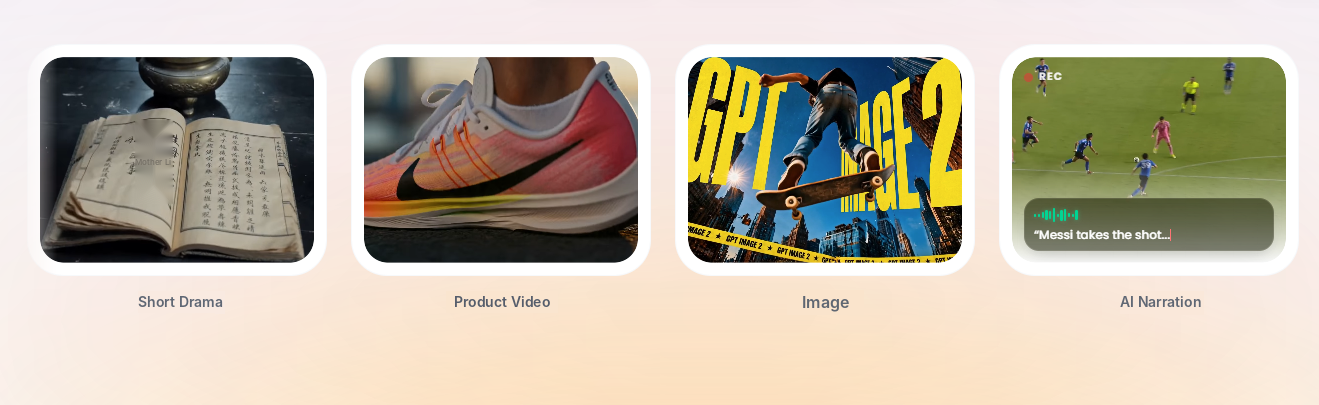
- Start on the Vibbit home page. Short video, ecommerce ads, avatar video and auto subtitles each have their own entry point. For UGC ads, go to Ecommerce.
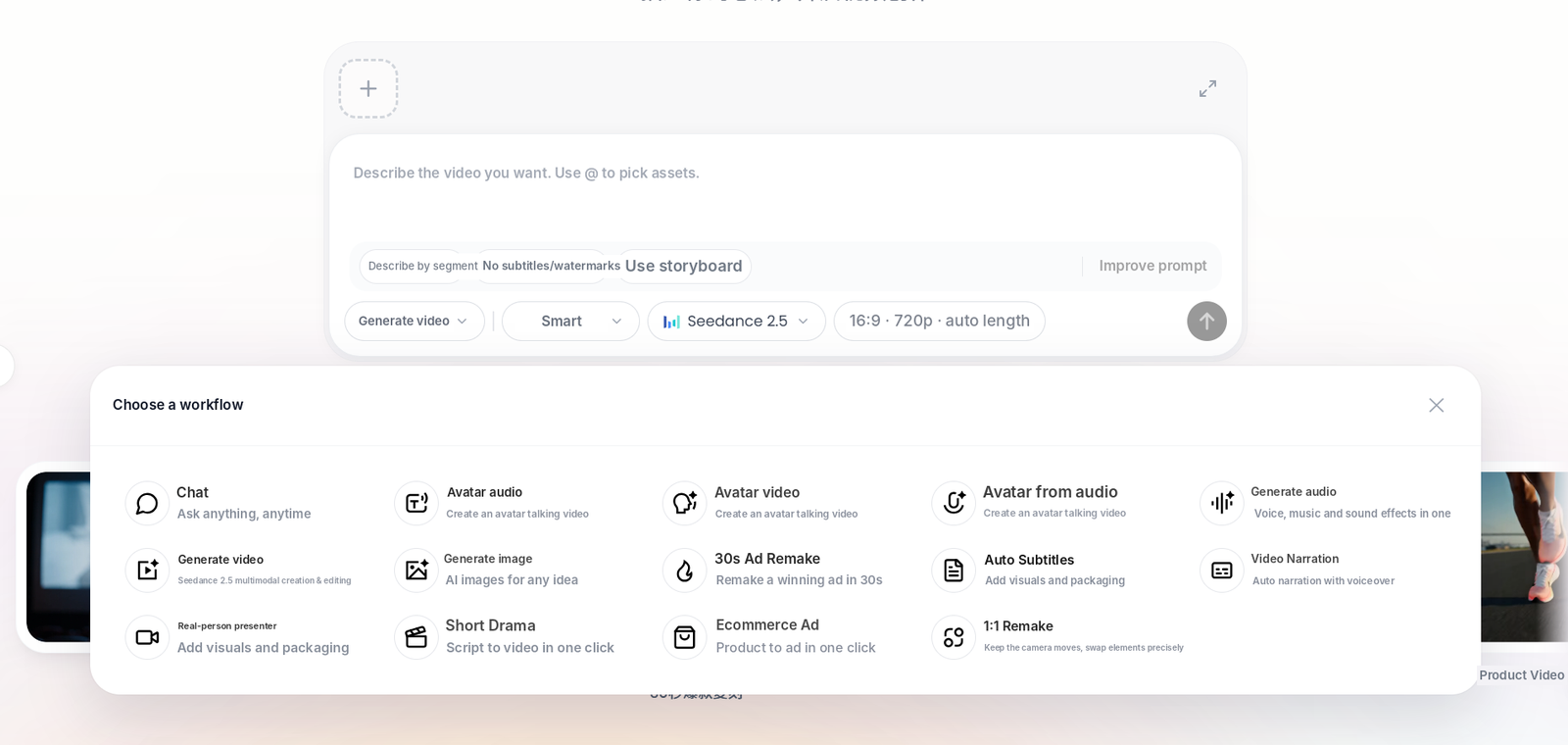
- Pick a workflow. Choose Ecommerce Ad: product to ad in one click. If you just want one talking video first, choose Avatar video.
- Paste a product link. Vibbit reads the product info and pulls out the product, model and selling-point scenes, then drafts shot prompts that you can edit before generating.
- Pick an avatar, write the script and generate the voice. To use your own voice, choose Avatar from audio. Add music, sound effects and B-roll in the same step.
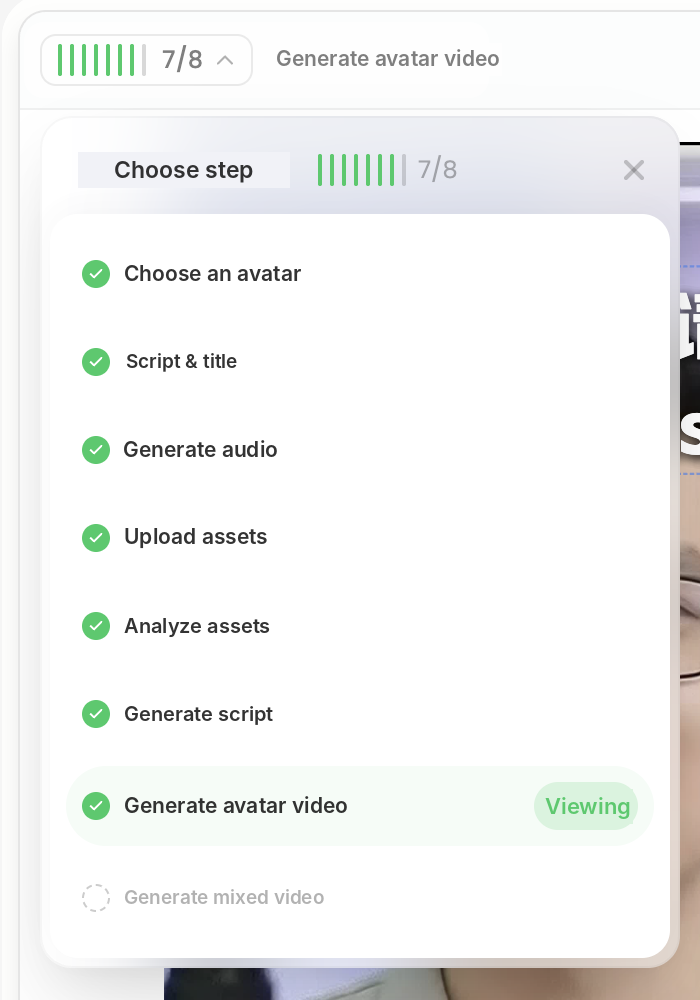
- Generate the avatar video, then the final cut. The panel walks you through each step: choose avatar, write script and title, generate audio, upload assets, analyze assets, generate script, generate avatar video, generate final mix. Finished steps get a check mark, so you can see where things stand.
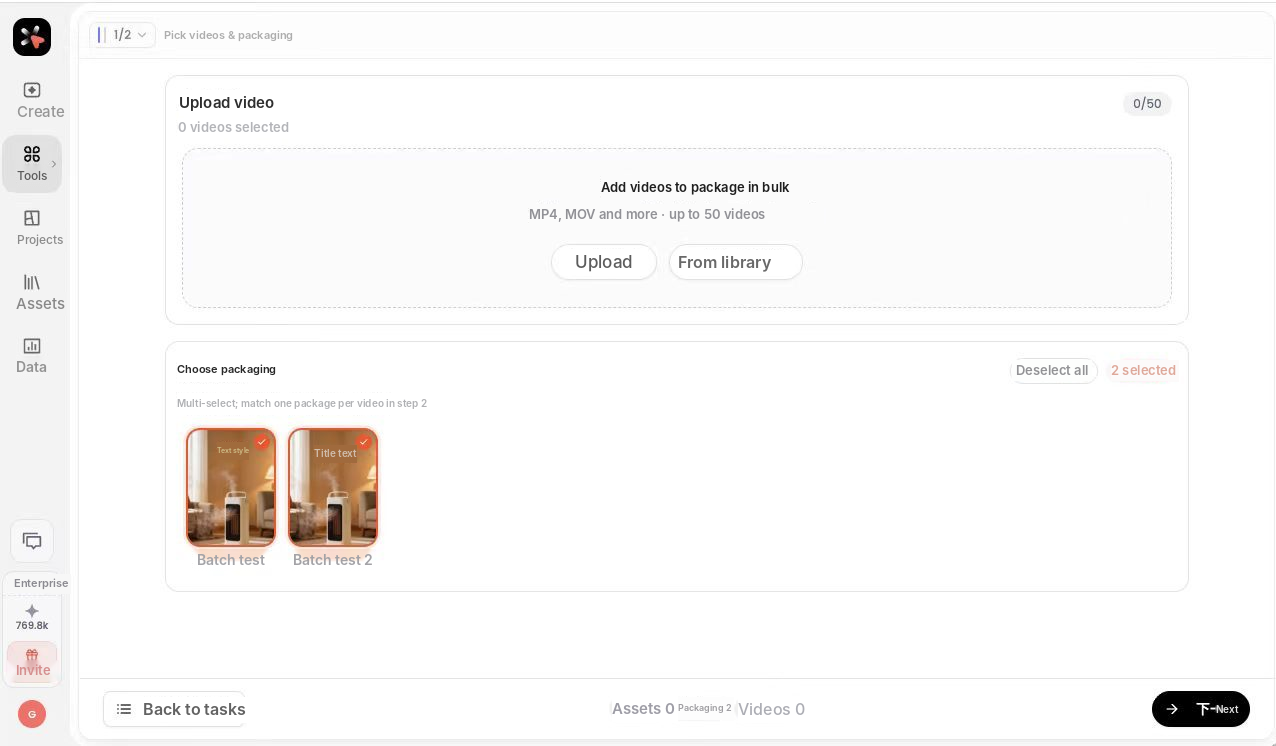
- Batch packaging for A/B tests. Upload several videos, apply packaging templates, and add titles, subtitles and end cards in bulk. One script can quickly become several versions.
Example: breaking down a 15-second UGC ad script
Stuck on the script? Don't start from a blank page. Paste a competitor video that's working into Vibbit's video breakdown, get its structure, then swap in your product.
The breakdown is organized into Hook (stop the scroll in the first 3 seconds), Value (show the benefit) and CTA (call to action), with a total length of 15 to 20 seconds. It also suggests several opening hooks and gives tips on sound and pacing, like turning up the product sounds and using music above 120 BPM.
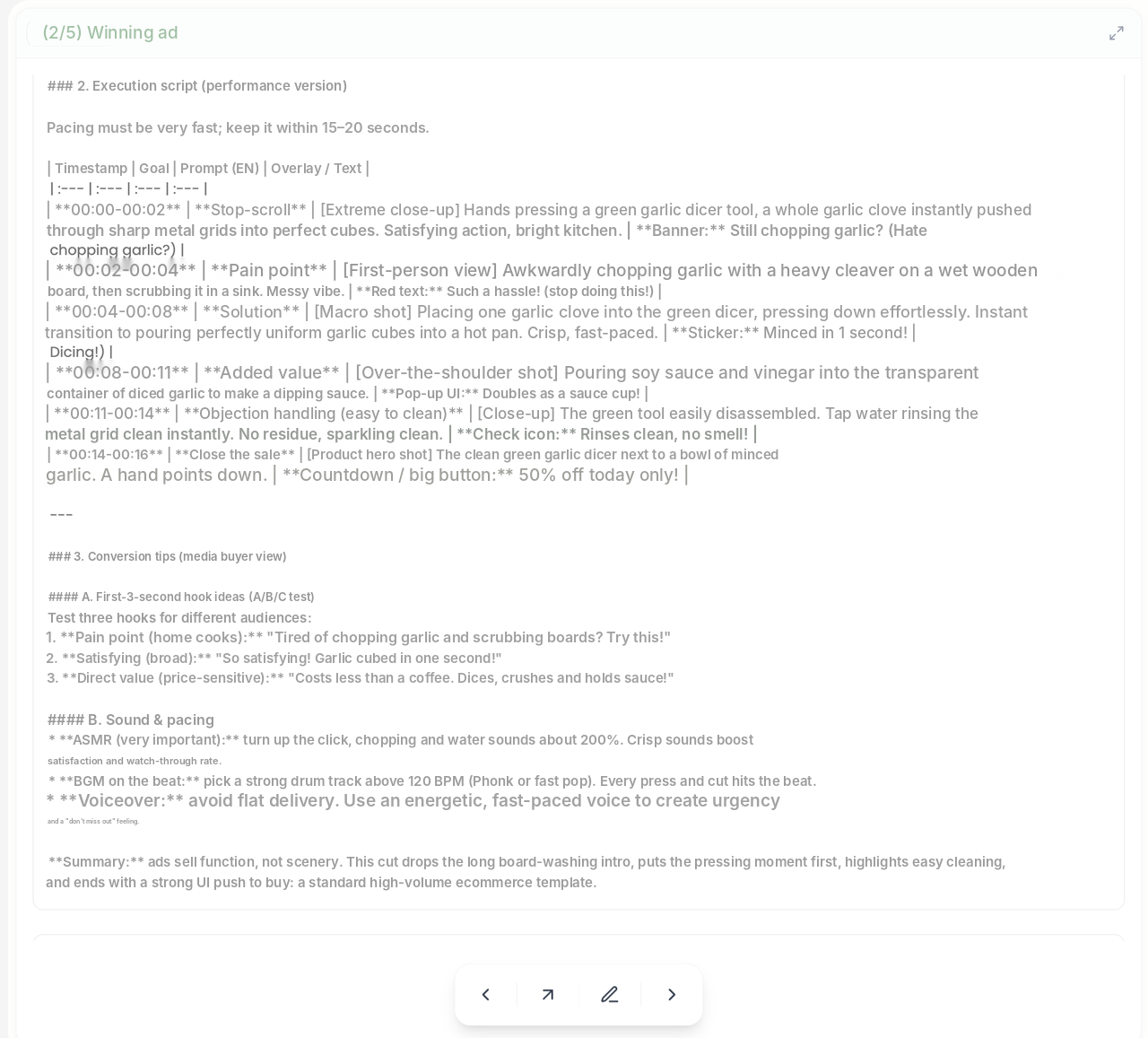
Take a kitchen gadget: the original is a hand-held video of someone using it, a classic UGC creative. The breakdown moves "the moment you press the garlic" to the very start, cuts the long intro and leaves one call to action at the end. That's the real structural difference between UGC and brand ads. It's not the image quality, it's the order of information.
FAQ
Is an avatar video still a UGC ad?
Yes, as long as it follows the UGC viewing pattern: one person talking to the camera about a product they used, simple visuals, conversational pace. UGC is about format and structure, not who's on screen. Platforms mainly care whether an ad claims to be a real customer, so don't have an avatar say "I'm a real buyer" or make claims you can't back up.
How long does it take to make one UGC ad?
Once the script is final, the voice and avatar video generate after you submit, and the task panel shows the current step and progress. Most of your time goes into writing the script and checking the voice.
What if I can't write scripts?
Two options. Break down a competitor video to get a Hook-Value-CTA structure and a ready-to-use script, then swap in your product. Or read reviews of similar products on Amazon and Reddit and pull real pain points from them. Scripts based on real customers' words sound much more human.
Can one creative run in several markets?
Yes. Use Vibbit Video Translation to make versions in English, Spanish, Portuguese and more, with voice and subtitles swapped and no reshoot.
Can I appear as myself?
Yes. Clone your avatar in Vibbit from a short video of you talking to the camera, then use your own face and voice without filming again.
Wrapping up
The hard part of UGC ads isn't ideas. It's volume: you need enough creatives to test before you find the one that works. Product link import, AI avatars and batch packaging solve exactly that.
Make your first UGC-style ad on vibbit.ai.